
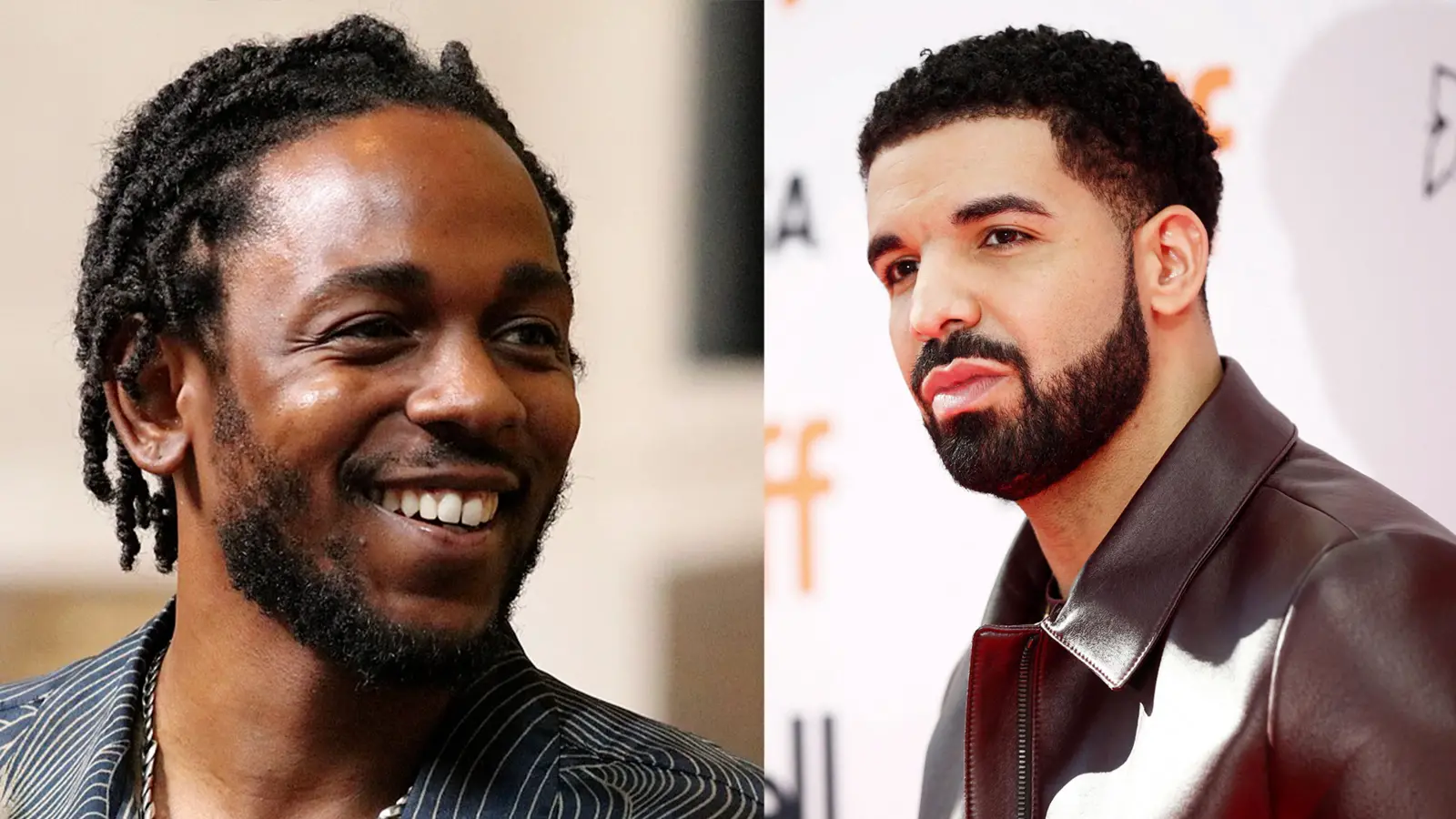
When Kendrick Lamar took the stage at the Super Bowl halftime show on Sunday night, he wasn't just making history as the first solo hip-hop artist to headline the event. He was also settling a score. With an audience of over 80,000 fans in the stadium and nearly 100 million viewers on television, Lamar delivered a pointed performance that included his controversial track "Not Like Us," a song that has become the anthem of his long-simmering feud with fellow rap superstar Drake.
The halftime show, traditionally a celebration of pop and rock acts, became a battleground for one of the most explosive rivalries in modern music. Lamar's setlist was carefully curated, and the inclusion of "Not Like Us" was anything but accidental. The song, which accuses Drake of being a "certified pedophile," was slightly altered for the broadcast, with Lamar omitting the most explicit accusation. Nevertheless, the message was unmistakable, and the crowd's reaction was deafening.
A Historic Halftime Performance
Kendrick Lamar's Super Bowl appearance was a milestone not just for him but for hip-hop as a genre. No solo rap artist had ever been given the coveted halftime slot. The fact that Lamar used that platform to take a direct shot at his biggest rival sent shockwaves through the entertainment world. It was a statement that the genre's biggest stage belonged to him, and that Drake, despite his commercial success, remained a secondary figure in Lamar's eyes.
The performance also highlighted the cultural significance of hip-hop in 2025. Once marginalized by mainstream award shows and sporting events, rap has now become the dominant force in popular music. Lamar's set, which included hits like "HUMBLE." and "Alright," was a reminder of his artistic range and his ability to merge political commentary with street-level authenticity. But it was "Not Like Us" that dominated the conversation, proving that the feud with Drake was more than just a personal grievance—it was a defining moment in hip-hop history.
The Early Friendship and Turning Point
The relationship between Kendrick Lamar and Drake was not always adversarial. In the early 2010s, Drake was the bigger star, and he extended a hand to Lamar, who was then an up-and-coming rapper from Compton, California. Drake featured Lamar on the track "Buried Alive" from his 2011 album Take Care, and later invited him to open on the Club Paradise tour in 2012. At the time, it seemed like a natural alliance between two of the most promising talents of their generation.
But the dynamic began to shift as Lamar's star rose. His 2012 major-label debut, good kid, m.A.A.d city, was a critical and commercial success, earning him seven Grammy nominations and establishing him as a leading voice in West Coast rap. Lamar's ambition was evident, and he was not shy about positioning himself as the best rapper of his generation. In 2013, he released a verse on Big Sean's song "Control" that sent shockwaves through the rap world. In it, Lamar declared that he was trying to "murder" his competition, name-checking Drake, J. Cole, and others. The verse was a declaration of war, even though Drake initially tried to downplay it.
For years, the two traded subtle jabs in interviews and on tracks, but the conflict remained largely beneath the surface. Drake seemed reluctant to engage, perhaps because he knew a full-scale feud with someone as lyrically gifted as Lamar would not end well for him. Lamar, meanwhile, continued to assert his dominance, releasing critically acclaimed albums like To Pimp a Butterfly and DAMN., both of which won Pulitzer Prize or Grammy recognition.
The Diss Track Escalation
The feud reignited in late 2023, when Drake and J. Cole released the collaborative song "First Person Shooter." In the track, both rappers referenced the "Big 3" of modern rap—Drake, J. Cole, and Kendrick Lamar—but implied that Lamar might be the weakest of the three. The line was meant to be a playful nudge, but Lamar took it as a direct challenge.
In March 2024, Lamar responded with a verse on Future and Metro Boomin's song "Like That." His response was blistering: "F the Big 3, it's just Big Me." With that line, Lamar not only dismissed the idea of a Big 3 but also positioned himself as the sole king of rap. The verse ignited a firestorm online, and fans immediately began picking sides.
Drake answered with the diss track "Push Ups," in which he mocked Lamar's height, his shoe size, and his relationship with his fiancée. But Drake also went further, using artificial intelligence to create fake vocals from 2Pac and Snoop Dogg—two of Lamar's idols—to attack him on a track called "Taylor Made Freestyle." The use of AI was controversial, and Snoop Dogg himself criticized the move. Drake then released "Family Matters," a track that accused Lamar of physical abuse and infidelity, allegations that Lamar has denied.
Lamar, for his part, focused his attacks on Drake's cultural authenticity. He accused the Canadian rapper of appropriating African-American culture, calling him a "fake" and a "great manipulator." Lamar also claimed to have a mole inside Drake's camp, who provided him with damaging information. These accusations added a layer of personal animosity to the feud that went beyond typical rap beef.
'Not Like Us' and the Fallout
The turning point came on May 4, 2024, when Lamar released "Not Like Us." The song was a scathing indictment of Drake, accusing him of harboring relationships with underage girls. The term "certified pedophile" became the centerpiece of the track, and its implications were immediate and severe. "Not Like Us" was not just a diss track; it was an attempt to destroy Drake's reputation permanently.
The song's impact was staggering. It broke Spotify's record for the most streams in a single day for a hip-hop track in the United States and debuted at number one on the Billboard 100. It also earned Lamar five Grammy Awards, including Record of the Year and Song of the Year. The track became an anthem, played at sporting events, parties, and even political rallies. It was a cultural phenomenon that transcended music.
Drake, who had weathered many rap feuds over his career, took the unprecedented step of taking legal action. In January 2025, he filed a defamation lawsuit against Universal Music Group, the parent company of both artists' labels, alleging that the company promoted "Not Like Us" despite knowing the accusations were false. The lawsuit argues that UMG had a financial incentive to release a song that would generate massive streams and controversy, even at Drake's expense. The case is still ongoing, and it has raised questions about the responsibility of record labels in mediating artist disputes.
The Super Bowl performance of "Not Like Us" was clearly intended to add more pressure. By bringing the song to the biggest television platform in America, Lamar ensured that the feud would be discussed by people who had never even listened to a rap album. It was a power move, and it worked.
Legal Battles and Cultural Impact
The legal battle between Drake and Lamar is unprecedented in hip-hop history. While rappers have been sued for defamation before, it is rare for a major label to be dragged into a feud between its own artists. Drake's lawsuit could have far-reaching implications for the music industry, potentially making labels more cautious about releasing songs that make defamatory accusations. It also raises the stakes for Lamar, who could face legal consequences if the courts rule against him.
Beyond the courtroom, the feud has had a profound impact on rap culture. It has reignited the age-old tradition of battle rap, where artists use their lyrics to assert dominance over rivals. But the intensity of this feud has also exposed the darker side of the genre, where personal attacks can escalate to accusations of criminal behavior. Some critics worry that the fight between Drake and Lamar has crossed a line, turning diss tracks into weapons of reputational destruction rather than displays of lyrical skill.
Fans have been divided throughout the feud. Some support Lamar, arguing that he is holding Drake accountable for his alleged behavior. Others side with Drake, viewing Lamar's accusations as a cynical attempt to win a rap battle. The online discourse has been toxic, with both camps engaging in harassment and doxxing. The feud has also sparked conversations about the role of women in rap disputes, as both artists have been accused of using their partners as pawns in their conflict.
Despite the chaos, both artists have seen their careers reach new heights. Lamar's albums and singles have sold millions of copies, and his Super Bowl appearance has cemented his status as a global superstar. Drake, too, has remained commercially successful, though his reputation has suffered among certain segments of the public. The feud has also boosted the profiles of other rappers who have weighed in, including J. Cole, who stepped back from the conflict after initially responding to Lamar's "Like That" verse.
The Super Bowl halftime show was a defining moment in this rivalry. Lamar's performance of "Not Like Us" was a bold declaration that he is not only the best rapper of his generation but also the victor in his conflict with Drake. However, the story is far from over. Drake's lawsuit could alter the course of the feud, and Lamar may have more surprises in store. The next chapter in this saga will unfold in courtrooms, on streaming platforms, and perhaps on another stage as big as the Super Bowl. For now, the world will continue to watch, listen, and choose sides.
Source:leparisien.fr News