

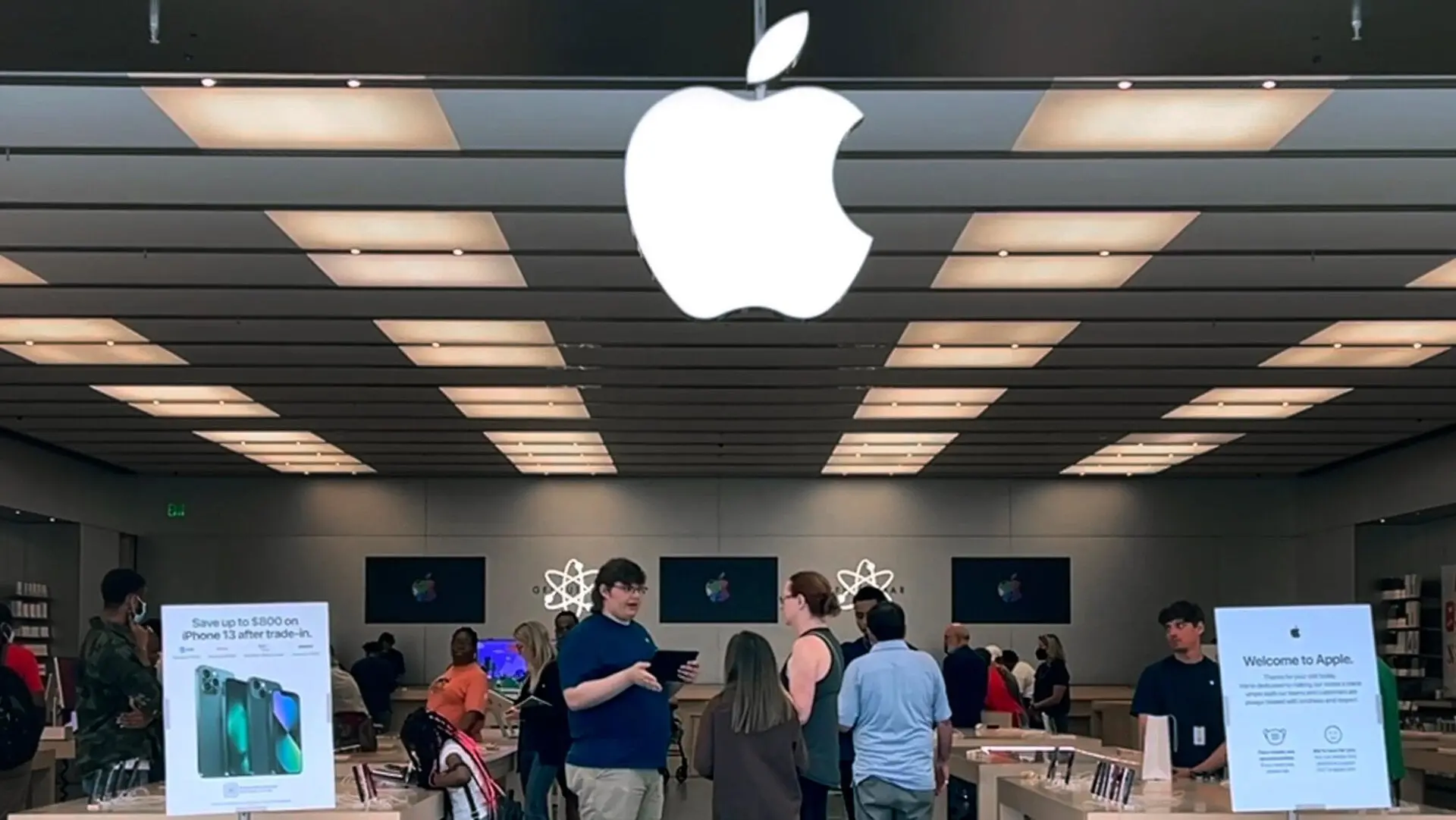
Apple is reportedly dipping its toe into recording and AI-summarizing your repair and tech support conversations with its employees at the Genius Bar. This new pilot program called “Live Notes” is being pitched as a time-saving tool for the store employees themselves, according to reports. It is still only in a limited number of stores. The recording of the conversation is auto-transcribed and summarized, and then stored in the “record of the repair session” on the Genius Bar employee’s work iPad.
But the tool has “sparked concern” among Apple Store workers, since, obviously, something almost exactly like this could be used for monitoring and evaluating employees. For now, Apple apparently claims the audio recordings aren’t saved, that the program is opt-in for both parties—the employee and the customer—and that managers don’t get to view the transcripts.
Understanding the Live Notes Pilot
The Live Notes pilot represents Apple’s latest effort to streamline the often complex and time-consuming process of diagnosing and repairing devices at its retail stores. According to insiders, the system works by using the microphone on the employee’s iPad to capture the conversation with the customer. Apple’s proprietary AI then transcribes the spoken words in real time and generates a concise summary of the key issues, recommended solutions, and any next steps. This summary is saved directly into the service record associated with that repair session.
The intended benefit for employees is significant: instead of frantically typing notes while trying to listen to a customer, they can focus entirely on the interaction. The AI handles the note-taking, freeing the employee to maintain eye contact, ask clarifying questions, and provide a more natural customer service experience. Apple has reportedly emphasized that the system is designed to be a productivity assistant for workers, not a surveillance tool.
However, the opt-in nature of the pilot adds a layer of complexity. Both the customer and the employee must consent to the recording before the session begins. If either party declines, the system does not activate. This is meant to alleviate privacy concerns, but it also means that the pilot’s effectiveness is limited by adoption rates. Early reports suggest that some employees are reluctant to participate, fearing that the data could eventually be used against them, even if current policies prohibit it.
Employee Concerns and Industry Parallels
The anxiety among Apple Store staff is rooted in a broader trend across the tech and financial sectors: the rise of employee monitoring tools. Wall Street loves tools like this—and not just big Apple investors. JPMorgan recently rolled out a monitoring tool that sounds similarly Orwellian, but the company similarly claims it’s just a helper for employees. The digital monitoring system uses video call data, meeting schedules, and—perhaps scariest of all—keystroke data, to cobble together a report that tells junior bankers whether their actual output matches their reported output. The company says it’s using it to evaluate performance from above, and claims “like the weekly screen time summaries on a smartphone, this tool is about awareness — not enforcement.”
This claim of “awareness, not enforcement” is strikingly similar to Apple’s messaging around Live Notes. Yet for employees, the line between assistance and surveillance can be blurry. In many companies, tools initially introduced as productivity aids have gradually been repurposed for performance evaluations. The fear among Apple Store workers is that even if managers currently cannot see the summaries, future software updates or policy changes could unlock that access. The fact that the program is a pilot only heightens these concerns, as pilots are often testing grounds for broader rollouts.
Furthermore, the context of Apple’s own privacy history makes the Live Notes program particularly sensitive. Outgoing Apple CEO Tim Cook spoke out in 2018 in support of European-style privacy regulations, and said privacy was a “fundamental human right.” Nonetheless, in 2019, in a scandal that eventually resulted in a class action settlement, Apple eavesdropped on Siri recordings in order to rate them. Apple admitted the practice was problematic shortly after it was exposed, saying “we realize we haven’t been fully living up to our high ideals, and for that we apologize.” That incident demonstrated that Apple’s privacy promises are not always ironclad, and it has left a lingering mistrust among both customers and employees.
Technical Details and Implementation
From a technical standpoint, Live Notes relies on Apple’s on-device AI processing to ensure that audio data does not leave the iPad. According to Apple’s documentation, the audio is transcribed locally using the neural engine in the iPad, and the resulting summary is generated on the device as well. The raw audio file is discarded immediately after transcription, and only the text summary is stored in Apple’s secure service records system. This approach is designed to minimize privacy risks and to align with Apple’s stated commitment to data minimization.
The summaries themselves are structured in a standardized format, including sections for customer complaint, diagnostic findings, recommended repair, and notes on any parts ordered or replaced. This structure allows for consistent record-keeping across different stores and employees. For customers who opt in, the summary can also be shared via email or in the Apple Store app, providing them with a detailed record of the interaction. This transparency could be a selling point for customers who appreciate having a written record of what was discussed.
Nevertheless, the implementation is not without its flaws. Some employees have reported that the transcription accuracy can vary based on accents, background noise, or technical jargon. Apple is reportedly working on improving the AI models to better handle these scenarios, but in the meantime, employees are advised to review and edit the summaries before finalizing them. This editing requirement somewhat undermines the time-saving claim, as employees may end up spending almost as much time correcting the AI’s output as they would have spent typing their own notes.
Broader Implications for the Tech Industry
Apple’s entry into this space is part of a larger movement toward leveraging AI for workplace productivity, particularly in customer-facing roles. Many companies, from call centers to retail stores, are experimenting with conversational AI that can transcribe, summarize, and even analyze interactions. The potential benefits are clear: faster service, more accurate records, and the ability to mine data for insights on common issues and customer sentiment. However, the risks are equally significant, including privacy violations, employee demoralization, and the potential for misuse by management.
The financial services industry has been a particularly aggressive adopter of such tools. As mentioned, JPMorgan’s monitoring system goes far beyond transcription, tracking keystrokes, meeting attendance, and even video call behavior. Goldman Sachs and Morgan Stanley have implemented similar systems under the guise of “productivity enhancement.” In each case, employees have voiced concerns about the chilling effect on their autonomy and the potential for these tools to be used as a basis for layoffs or disciplinary action. Apple’s foray into this territory, even in a limited form, signals that no industry is immune to the temptation of AI-powered surveillance.
Privacy advocates have also weighed in. The Electronic Frontier Foundation (EFF) has long warned about the dangers of workplace monitoring, arguing that it erodes trust and creates a culture of fear. In a statement, an EFF spokesperson noted that “even if a company promises that recordings are temporary and inaccessible to managers, the mere awareness of being recorded can alter behavior. Employees may become cautious about speaking freely, and customers may feel uncomfortable sharing sensitive information about their devices.” This is especially pertinent at the Apple Genius Bar, where customers often discuss personal data on their phones or laptops.
Historical Context: Apple’s Privacy Journey
Apple’s relationship with privacy has been a complex one. In the early 2010s, Apple positioned itself as a champion of user privacy, largely in contrast to Google and Facebook. Tim Cook made privacy a cornerstone of his tenure, famously saying, “We think privacy is a fundamental human right.” Apple introduced features like App Tracking Transparency, on-device processing for Siri, and differential privacy for data collection. These moves were praised by privacy advocates and helped Apple differentiate its brand.
However, there have been notable missteps. The 2019 Siri grading scandal revealed that Apple contractors were listening to a small percentage of Siri recordings—without users’ knowledge—to improve the assistant’s accuracy. Apple suspended the program and apologized, but the damage was done. Critics argued that Apple’s high-minded rhetoric did not always match its practices. The Live Notes pilot, while more transparent and limited in scope, inevitably recalls that scandal for many employees and customers.
Moreover, Apple’s larger business model is still heavily reliant on advertising and services revenue, which creates inherent tensions with privacy. While Apple does not collect as much data as Google or Meta, it still uses customer data for targeted ads in the App Store and Apple News. Some analysts have suggested that the Live Notes summaries could eventually be used to improve Apple’s product analytics or even to sell aggregated insights to third parties, though Apple has firmly denied any such plans.
Employee Reactions and Union Considerations
In recent years, Apple Store employees in several countries have unionized to demand better working conditions, pay, and benefits. The Live Notes pilot has become a new point of contention in these labor disputes. Union representatives have argued that the program should be subject to collective bargaining, as it fundamentally changes the nature of workers’ tasks and introduces a surveillance component. They have called for greater transparency about how the data will be used, who has access, and what safeguards are in place to prevent mission creep.
One anonymous Apple Store technician told a reporter, “It feels like they’re testing the waters. Today it’s a note-taking tool. Tomorrow it could be a performance review system. I don’t trust that the policy won’t change once they have enough data.” This sentiment is widespread, and some employees have already started refusing to use the tool, even when customers opt in. Apple has not yet indicated how it will handle such resistance, but the company likely expects that as the pilot continues, more employees will become comfortable with the system.
From a management perspective, the program could also help Apple standardize the quality of service across its stores. By having AI-generated summaries, Apple could analyze common issues, training gaps, and customer satisfaction trends at a macro level—without needing to access individual employee records. However, the line between macro analysis and micro monitoring is thin, and Apple will need to communicate its intentions clearly to maintain trust.
The Future of Live Notes and Similar Technologies
Gurman calls Live Notes an early test, and says that’s part of what makes employees nervous, since invasive monitoring is increasingly becoming bedrock reality in the tech biz. As AI transcription and summarization tools become cheaper and more accurate, it is likely that many retailers will adopt similar systems. Amazon, for instance, has long monitored warehouse workers using cameras and AI, and has faced significant backlash. Apple, with its premium brand and privacy-focused image, must tread carefully to avoid a PR disaster.
If the pilot succeeds, Apple may expand Live Notes to all of its 500+ retail stores worldwide. It could also integrate the tool into other customer service channels, such as online chat, phone support, and even the Apple Store app. Aggregated data from millions of repair conversations could provide Apple with unprecedented insights into product reliability, common user errors, and emerging issues. This could drive improvements in hardware design and software updates, ultimately benefiting customers.
However, the road to full adoption is fraught with challenges. Apple must navigate differing privacy laws in countries like the European Union, where GDPR imposes strict rules on consent and data processing. The opt-in requirement may be more robust in Europe, but Apple will need to ensure that its implementation complies with local regulations. Additionally, employee unions may push back, potentially leading to legal battles or negative media coverage.
In the meantime, customers visiting Apple Stores participating in the pilot will be asked to consent to the recording. The immediate reaction from consumers has been mixed. Some appreciate the transparency and the promise of a more efficient service. Others are wary, recalling the Siri scandal and questioning why a summary cannot be generated through a simple text-based system without audio recording. Apple has attempted to address these concerns by emphasizing that the audio is not saved and that the summary is only used for that specific repair session.
Self-monitoring purely for the convenience of employees may strain plausibility, but for what it’s worth, outgoing Apple CEO Tim Cook spoke out in 2018 in support of European-style privacy regulations. Nonetheless, the company’s actions have sometimes contradicted its words. The Live Notes pilot is a test not only of technology but of trust. Whether employees and customers will embrace it depends largely on how Apple manages the program over the coming months.
Source:Gizmodo News