

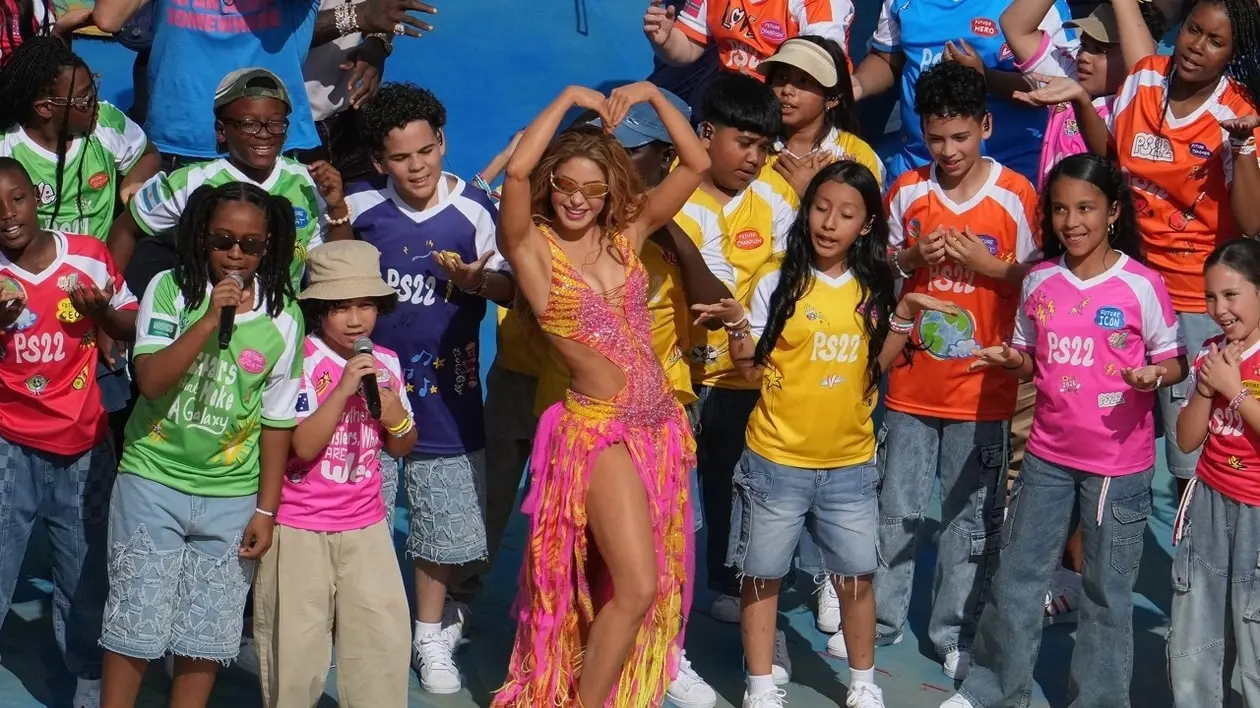
The World Cup final between Spain and Argentina delivered not only a dramatic match but also a halftime show that rivaled the Super Bowl in scale and star power. On Sunday, at the MetLife Stadium in New Jersey, the pause between the two halves became a global music event featuring Madonna, BTS, Justin Bieber, and Shakira. The show lasted 27 minutes and 24 seconds, nearly matching the 29 minutes and 42 seconds of actual play in the first half.
A Halftime Spectacle Like No Other
The concept of a grand halftime show at the World Cup is relatively new, borrowing heavily from the American football tradition. The Super Bowl halftime show has become a cultural phenomenon, and FIFA aimed to replicate that magic for the global audience. This year's edition was the most ambitious yet, with a lineup that spanned generations and genres.
Shakira opened the performance with a reprise of the tournament's official anthem, a song that had been played throughout the competition. The Colombian singer, known for her energetic dance moves and hits like "Hips Don't Lie" and "Waka Waka," set the tone for the evening. Her participation was especially fitting given that "Waka Waka" was the official song of the 2010 World Cup, and she has a long history with football events.
Next came the globally dominant K-pop group BTS. The seven-member boy band has become a household name, with a dedicated fan base known as ARMY. Their performance included a medley of their biggest hits, such as "Dynamite" and "Butter," which have broken numerous streaming records. BTS's appearance at the World Cup final marked another milestone in their career, showcasing their ability to command a stage on the world's biggest sports platform.
Justin Bieber, a pop superstar whose career has evolved from teenage heartthrob to mature artist, followed with a set that included "Sorry" and "Peaches." Bieber's vocals and stage presence have matured over the years, and his inclusion appealed to a younger demographic. His performance was a reminder of his enduring popularity despite controversies earlier in his career.
The show culminated with Madonna, the Queen of Pop, who has been reinventing herself for four decades. She performed a medley that included "Like a Prayer," "Vogue," and "Hung Up." Madonna's career has been marked by constant reinvention, pushing boundaries in music, fashion, and social commentary. At the World Cup final, she proved that at age 65, she can still captivate a global audience with her charisma and showmanship.
Behind the Scenes: Organizing a 27-Minute Show
Producing a halftime show of this magnitude requires months of planning. The MetLife Stadium pitch had to be transformed within minutes, with stages, lighting, and sound equipment installed under tight security. Choreographers worked with each artist to ensure seamless transitions. The show's director, who has previously worked on Super Bowl halftimes, faced the challenge of coordinating multiple acts within a strict time frame.
The length of the show—27 minutes and 24 seconds—was unusual. Typical football halftimes last 15 minutes, but FIFA extended this one to accommodate the star-studded lineup. This move was criticized by some purists who felt it disrupted the flow of the game, but the majority of viewers embraced the entertainment. The extended break also allowed for more commercial time, generating significant revenue for FIFA and its sponsors.
Technical rehearsals took place at night after the stadium was empty. Each artist had to perform a soundcheck and full dress rehearsal, often in secret to avoid leaks. The final run-through was held just 24 hours before the match, and the team worked through the night to fine-tune every detail.
The Artists: A Look at Their Impact
Madonna's influence on pop culture is immeasurable. She emerged in the 1980s and has sold over 300 million records worldwide. Her halftime performance at Super Bowl XLVI in 2012 is still remembered as one of the best. At the World Cup, she brought the same energy, proving that age is just a number.
BTS, formed in 2010, has broken barriers for non-English music in the global market. They have topped the Billboard Hot 100 multiple times and have performed at major international events, including the United Nations General Assembly. Their message of self-love and positivity resonates with millions.
Justin Bieber's career began with his debut single "One Time" in 2009. Despite personal struggles, he has remained a chart-topping artist. His halftime performance was a celebration of his journey from Canadian teen sensation to global icon.
Shakira has long been a bridge between Latin and mainstream pop. Her World Cup anthem "Waka Waka" (2010) remains one of the most-watched music videos on YouTube. She also performed at the 2014 World Cup closing ceremony. Her participation in this halftime show was a nod to her enduring association with the tournament.
Reception and Legacy
The show received mixed reactions on social media. Many fans praised the diverse lineup and the high production value. Some criticized the length, saying it disrupted the match's momentum. Others complained about audio issues, with the vocals occasionally drowned out by the backing track. Despite these minor flaws, the event was widely seen as a success.
In the days following the final, the performances trended on YouTube and streaming platforms. Clips of Madonna's medley gained millions of views, and BTS fans shared their reactions across Twitter and TikTok. The halftime show became a cultural moment that transcended the sport.
This World Cup halftime show sets a new standard for future tournaments. FIFA has hinted that even larger productions are planned for the next World Cup, which will be hosted by the United States, Canada, and Mexico. With the American influence on the global game growing, the marriage of football and pop music is likely to become even more intertwined.
The show also highlighted the global nature of music. An American pop star, a British-origin Canadian singer, a Colombian icon, and a Korean septet shared the same stage, reflecting the diverse audience that football commands. It was a reminder that sports and entertainment are powerful forces for unity.
Additional Background: The Evolution of Halftime Shows
The concept of a halftime performance dates back to the early days of American football, but it wasn't until the 1990s that the Super Bowl halftime show became a big-budget spectacle. Michael Jackson's 1993 performance set a new benchmark, featuring elaborate choreography and pyrotechnics. Since then, artists like Prince, Beyoncé, and Lady Gaga have used the platform to deliver iconic moments.
In contrast, the World Cup halftime show has historically been more modest, often featuring local performers or marching bands. The shift toward a Super Bowl-style extravaganza began in 2014 when FIFA hired a major production company. However, it wasn't until this year that the lineup reached the star power of a Super Bowl halftime.
The decision to include K-pop group BTS was strategic. K-pop has exploded in popularity worldwide, and BTS's involvement guaranteed a massive viewership from Asia and beyond. Similarly, Madonna's participation appealed to older generations, while Bieber and Shakira covered the millennial and Gen Z audiences.
Economic and Cultural Impact
The halftime show also had significant economic implications. Brands paid millions for ad slots during the break, and ticket prices for the final soared partly because of the musical lineup. The event was streamed live across multiple platforms, including YouTube and social media, reaching an estimated 1.5 billion viewers worldwide.
Culturally, the show reinforced the idea that football is more than just a game. It is a global festival that brings together people from different backgrounds. The inclusion of artists from various countries sent a message of inclusivity and diversity.
Some critics argued that the show overshadowed the football itself. The match between Spain and Argentina was a hard-fought battle that ended in a narrow victory for Spain. But the halftime show became the talk of the evening, with many viewers admitting they tuned in specifically for the performances.
In the weeks following the final, media outlets analyzed every aspect of the show, from the choreography to the costume design. Fashion critics praised Shakira's sequined outfit, while BTS's coordinated suits were compared to a K-pop music video. Madonna's layered dress, designed by a renowned Italian fashion house, was also widely discussed.
Technical Challenges and Innovations
To execute a 27-minute show, the production team used advanced technology. The stage was built with modular components that could be assembled and disassembled quickly. Lighting rigs were suspended from the stadium rafters, and a massive LED screen served as a backdrop for each act.
Sound engineers faced the challenge of balancing live vocals with pre-recorded tracks. The stadium's acoustics are designed for crowd noise, not musical clarity, so multiple speakers were installed around the pitch. Each artist had a dedicated sound check, but during the live broadcast, some audio glitches occurred.
The coordination of pyrotechnics and special effects was handled by a team of experts. Fireworks, confetti, and laser lights were timed to the beat of each song. The finale featured a spectacular fireworks display that lit up the New Jersey skyline.
Source:Ouest-France.fr News