

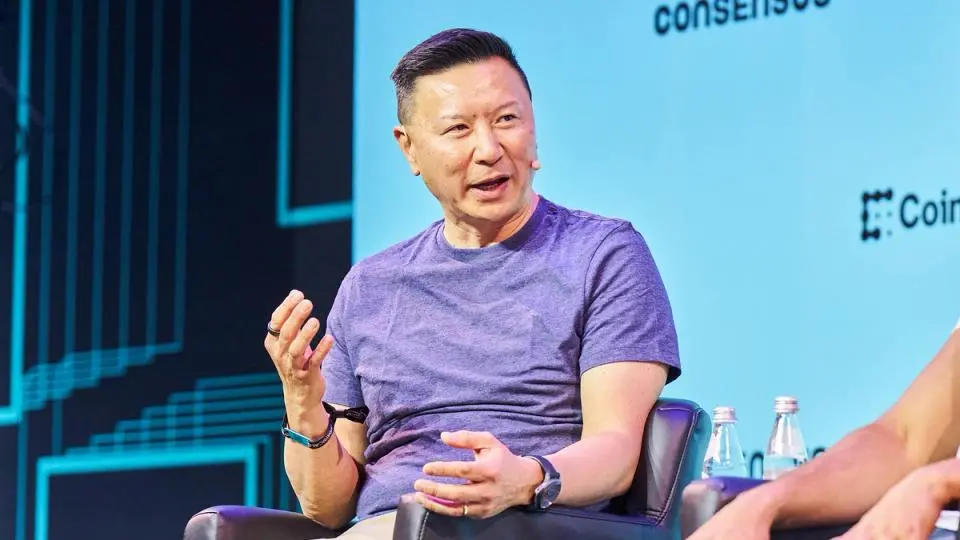
MoneyGram CEO Anthony Soohoo believes that blockchain technology is most effective when it operates invisibly to end users. In an interview with CoinDesk, Soohoo outlined how MoneyGram's blockchain strategy has evolved from early experimentation into a broader effort to modernize the company's global payments infrastructure. The core principle: make cross-border remittances faster, cheaper, and more transparent while keeping the technology hidden from customers.
MoneyGram, a legacy money transfer company founded in 1940, has been exploring blockchain and digital assets for several years. Its partnership with the Stellar Development Foundation began in 2019, allowing users to send USDC stablecoin via the Stellar network and cash out at MoneyGram locations. That pilot laid the groundwork for a deeper integration. Today, MoneyGram uses Stellar's blockchain to settle transactions between its own accounts, reducing settlement times from days to seconds and cutting costs for high-volume corridors.
From Partnership to Infrastructure
Soohoo emphasized that MoneyGram's current blockchain strategy is not about marketing buzzwords but about real operational improvements. 'Blockchain is like the plumbing. Customers don't need to see it. They just need the water to flow reliably,' he said. The company now runs validator nodes on multiple blockchain networks, including Stellar, Solana, and Tempo (a Stellar-based platform focused on payments in the Middle East and Africa). Running validators allows MoneyGram to have a stake in network security and governance while ensuring transaction reliability for its own settlement layer.
The expansion beyond Stellar is significant. Solana offers high throughput and low fees, which could be beneficial for high-volume retail transfers. Tempo, meanwhile, specializes in corridors like India-to-Pakistan and UAE-to-Philippines, where MoneyGram has strong market presence. By participating as a validator, MoneyGram gains direct access to on-chain liquidity and can route transactions without relying on third-party intermediaries.
The MGUSD Stablecoin Strategy
A key component of MoneyGram's evolving blockchain strategy is its own stablecoin, MGUSD. Launched in early 2026, MGUSD is a regulated dollar-backed token issued on the Stellar network. Soohoo sees MGUSD as more than just a settlement tool. 'Think of it as a building block for new financial products,' he said. MoneyGram plans to use MGUSD to create savings products, cross-border loans, and even a remittance-based credit score system. Customers could deposit dollars at a MoneyGram agent, receive MGUSD instantly, and then use that balance to pay bills, send money, or earn yield.
However, Soohoo stressed that the customer experience will remain unchanged. When a user sends money from the U.S. to Mexico, the app will still show pesos and a simple transaction history. The blockchain conversion happens behind the scenes. 'The worst thing we could do is ask customers to manage private keys or understand gas fees,' he said. This user-centric philosophy aligns with MoneyGram's heritage as a mass-market service provider, not a crypto-native platform.
Industry Context and Competition
MoneyGram's approach puts it in an interesting position relative to both traditional remittance competitors and pure-play crypto firms. Western Union has also experimented with blockchain, but has not made such a public commitment. Rivals like Wise (formerly TransferWise) use proprietary private networks for instant transfers, but lack the breadth of MoneyGram's physical agent network—over 350,000 locations in 200 countries. Meanwhile, crypto-native remittance platforms like BitPesa and Circle's Cross River Bank focus on converting crypto to local currency, but often require users to interact with blockchain directly.
Soohoo argues that MoneyGram's hybrid model offers the best of both worlds: the speed and transparency of blockchain settlements, combined with the trust and accessibility of a regulated, physical network. 'Our agents are mom-and-pop shops, not crypto exchanges. They don't need to understand blockchain. They just need to give cash to a customer,' he said.
Regulatory and Security Considerations
Operating a stablecoin and running validators brings regulatory scrutiny. MoneyGram has taken a cautious approach, working with regulators in all jurisdictions where it operates. MGUSD is issued under a limited-purpose trust charter in the U.S., and the company has obtained money transmitter licenses in all 50 states. Soohoo noted that regulatory clarity is crucial for mainstream adoption. 'We need rules that protect consumers without stifling innovation. The Clarity Act in Congress is a step in the right direction,' he said, referring to a proposed stablecoin bill.
Security is another priority. MoneyGram's validators are operated in secure data centers with hardware security modules. The company also uses multi-signature wallets and regular audits to safeguard customer funds. Soohoo acknowledged that blockchain hacks are a concern, but argued that MoneyGram's traditional security practices, combined with blockchain's transparency, actually reduce risk. 'On a public ledger, you can trace every transaction. It's harder to hide fraud,' he said.
Future Outlook
Looking ahead, MoneyGram plans to integrate blockchain into more of its internal operations. The company is testing a tokenized version of its own receivables, which could allow agents to settle balances instantly instead of waiting for net settlement cycles. It also explores using blockchain for identity verification, leveraging self-sovereign identity standards to reduce know-your-customer costs.
Soohoo expects that within five years, most of MoneyGram's transaction volume will settle on blockchain rails, but customers will never notice the change. 'They'll just see faster transfers, lower fees, and more options. That's success. Technology should fade into the background,' he said.
The CEO's vision reflects a pragmatic approach to blockchain adoption: focus on practical utility rather than ideological purity. By abstracting away complexity, MoneyGram aims to bring the benefits of decentralized technology to a global audience that may never own a single cryptocurrency. If successful, it could serve as a blueprint for other legacy financial firms seeking to modernize without alienating their existing customer base.
Source:Coindesk News