

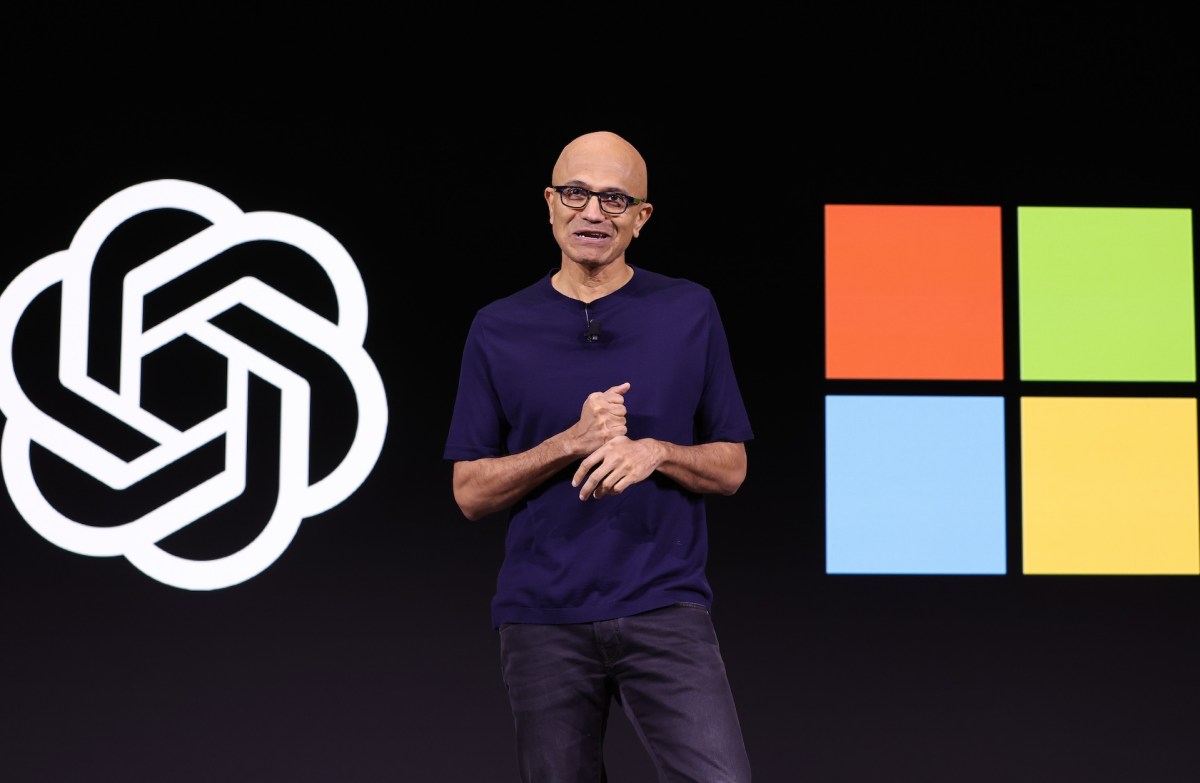
In a surprising move, Microsoft CEO Satya Nadella has added his voice to a growing chorus of concerns about the risks enterprises face when using proprietary AI models. While AI adoption surges across industries, the debate over data privacy and model ownership has intensified. Nadella's recent blog post, published on a Sunday, directly addresses the fear that AI labs like OpenAI and Anthropic could act as Trojan horses, gaining access to sensitive business information and potentially becoming competitors to their own customers.
Nadella's warning is clear: enterprises are paying twice for AI. They pay directly for token usage, but they also indirectly surrender something far more valuable—their proprietary knowledge. "You essentially pay for intelligence twice, once with money, and again with something even more valuable: the proprietary knowledge you must reveal to make that intelligence useful," he writes. The better the model performs, the more data the enterprise must feed it, including prompts, corrections, and usage patterns. This data, which Nadella calls "exhaust," teaches the model the nuances of a business. Every correction a user makes becomes part of the model's institutional know-how, something a competitor could never buy.
The concern is not new. Venture capitalists like Jason Calacanis and Palantir CEO Alex Karp have previously raised similar alarms. However, Nadella's position is particularly notable because Microsoft has invested heavily in both OpenAI and Anthropic. By urging enterprises to be wary, he is essentially steering them away from the very models his company profits from. This apparent contradiction has sparked debate across the tech industry.
The Hypocrisy of Model Training
Nadella points out a double standard in the AI industry. Model makers freely scrape the internet to train their models on public data, often under fair use claims. Yet, they impose restrictive terms on enterprises that want to use distillation—the process of studying a model's outputs to train a new, often cheaper, model. "While the great innovation that comes from model providers having fair use rights to train models on public data is needed, I find it ironic that the status quo is to then turn around and impose restrictive terms on distillation," Nadella writes.
Distillation has become a contentious topic. In February, Anthropic accused Chinese open-source models of sending millions of prompts to Claude as a way to improve their own models. Anthropic urged the U.S. government to tighten export controls. Nadella argues that model makers cannot have it both ways: they cannot freely train on the world's data while locking down their own models. Enterprises should have the right to learn from the models they use.
A Growing Movement Toward Open Source
Nadella's solution is pragmatic for a cloud provider. He recommends that companies "retain ownership" of their data—including prompts, feedback, and corrections—by building proprietary learning environments on the cloud. He also advocates for creating "orchestration layers" that allow easy switching between AI models from different providers, preventing lock-in. Tools like AI gateways have become increasingly popular for this purpose, and Microsoft's Azure stands to benefit if companies choose its cloud for these environments.
The subtext of Nadella's post points toward open-source models. Large enterprises, many of which still operate their own data centers alongside cloud usage, are already shifting to open-source models installed on their own premises. Idit Levine, founder and CEO of Solo.io, a company that helps enterprises manage AI systems, says she sees this shift firsthand. Her customers experiment with proprietary models but soon ask: "Can I take an open-source model and run it on-prem? It will do almost 90% of what the big one's doing. It will cost way less." They understand the tradeoff and value control over their data.
Solo.io's technology was selected to power the Linux Foundation's Agentgateway project. Its customers include T-Mobile, ADP, and SAP. Levine believes on-premise open-source models represent the next big wave in enterprise AI. Other companies like Vercel and OpenRouter report a surge in traffic to open-source models. Open models accounted for 29% of all traffic routed through Vercel's gateway last month.
Implications for the Future of Enterprise AI
Nadella's warning comes at a time when enterprises are rapidly integrating AI into their operations. The temptation to use the most powerful proprietary models is strong, but the long-term risks are becoming harder to ignore. By giving away proprietary knowledge, companies may inadvertently train their future competitors. Nadella's message is a call to action: "In consuming intelligence, you are creating intelligence. And what you create should belong to you."
This advice resonates with a broader trend of data sovereignty and cost optimization. As enterprises become more sophisticated in their AI usage, they are likely to demand more transparency and control. The shift toward open-source models, whether hosted on-premises or in the cloud, offers a path to retain ownership of valuable data while still leveraging cutting-edge AI capabilities.
Microsoft's own position is nuanced. While Nadella's blog may seem to undermine its investments in OpenAI and Anthropic, it also positions Microsoft as a champion of enterprise data rights. By advocating for open architectures and data retention, Microsoft aligns itself with the needs of its cloud customers. The company's Azure platform already offers a range of AI services, both proprietary and open-source, giving enterprises flexibility.
Other major players are also reacting. Google and Amazon have similar cloud offerings with model-agnostic tools. The competition among cloud providers to host enterprise AI workloads will intensify as more companies heed Nadella's warning. Meanwhile, startups like Solo.io, Vercel, and OpenRouter are capitalizing on the demand for model switching and on-premise deployment.
The debate over AI data privacy and ownership is unlikely to subside. With the CEO of one of the world's largest tech companies openly urging caution, enterprises have a clear signal to reassess their AI strategies. The era of blindly trusting proprietary AI labs may be coming to an end, replaced by a more cautious, ownership-minded approach.
Source:TechCrunch News