
Texas Governor Greg Abbott, a Republican, has ordered all state agencies to stop funding Flock Safety, the company behind a vast network of AI-powered surveillance cameras that read license plates and are installed in communities across the country. The Thursday night order came just as an impending investigative report prepared to expose how Texas funded Flock cameras at the local level. That reporting detailed at least $30 million in Texas grants used by local agencies to buy Flock cameras, with money derived from a fee levied on Texans' auto insurance policies.
Headline
Texas Blocks Funding for Flock as Backlash Grows Against AI Surveillance Cameras
Key Facts
- Texas Governor Greg Abbott blocked state funding for Flock Safety cameras on Thursday night.
- The order applies to all state agencies that had been providing grants for Flock cameras.
- An investigative report found that Texas spent at least $30 million in grants funded by a fee on auto insurance policies.
- Gina Hinojosa, the Democratic nominee challenging Abbott, released an ad criticizing Flock deployment in Texas.
- Bipartisan candidates in Michigan and Pennsylvania have also criticized Flock camera programs.
- Republican Senator Josh Hawley of Missouri launched an investigation into Flock Safety's data-handling practices.
- There are now more than 120,000 Flock cameras across 49 states.
What is Flock Safety?
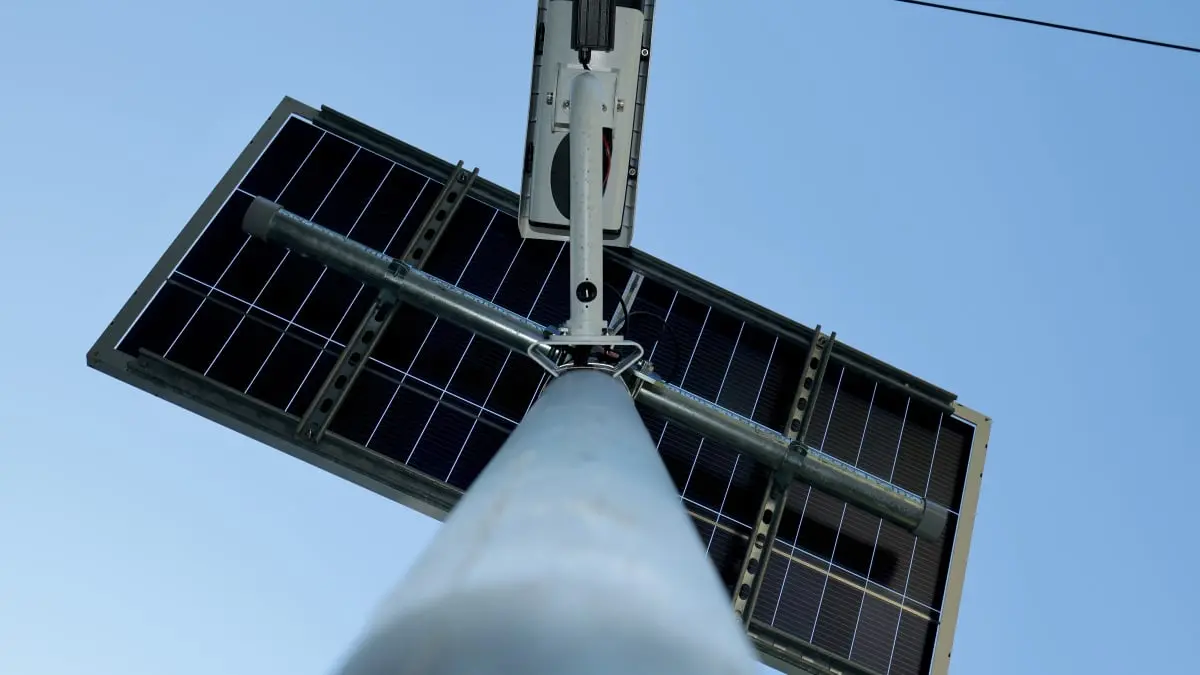
Flock Safety sells solar-powered cameras equipped with artificial intelligence software designed to capture and analyze license plate data. The cameras can also record vehicle characteristics, and some models can detect missing or wanted plates. Law enforcement agencies use the alerts to try to track down stolen cars, identify suspects, or investigate crimes. The company markets itself as a crime-solving tool, but critics argue that the system creates a permanent, warrantless surveillance grid over public life.
The cameras are often mounted on street poles, utility poles, or other structures in neighborhoods, parking lots, and along major roads. Unlike traditional police CCTV cameras, Flock cameras focus primarily on license plates and vehicle metadata, not individuals' faces. Yet that data can reveal an enormous amount about people's movements and routines, since license plates are linked to vehicle registrations and by extension to drivers' travel patterns.
Abbott's Order and Its Context
Abbott's order barring state agencies from funding Flock Safety was framed as a response to concerns about government overreach and constitutional rights. The order came from the Governor's Office and was directed at all state agencies. It does not necessarily force local law enforcement to remove existing Flock cameras purchased with grant money, but it prevents new state funding from flowing to the company. The exact terms of the order were not fully detailed, but the action marks one of the highest-level political reactions to the growing criticism of Flock Safety.
The timing is notable because it coincided with an upcoming investigative report. According to that report, Texas lawmakers increased a fee on car insurance policies to raise money for public safety grants. Those grants were then used by local agencies across the state to acquire Flock cameras. The state's investment in the AI surveillance network therefore depended on a funding mechanism tied to Texas car insurance policyholders. At a time when inflation and insurance rates are already a concern for many households, the revelation that these fees were used to underwrite a statewide surveillance network has created additional political tension.
A Bipartisan Backlash
What makes the Flock debate unusual is that it cuts across party lines. In an era of sharp partisan division, Republicans and Democrats have both found reasons to oppose or question Flock Safety's expanding presence. On one side, many conservatives have raised alarms about warrantless surveillance, privacy rights, and the erosion of the Fourth Amendment. On the other side, many progressives are concerned about racial profiling, data security, and the potential for law enforcement to weaponize AI systems against vulnerable communities.
In Texas, Abbott's Democratic challenger, Gina Hinojosa, quickly seized on the issue. Hinojosa, a state representative from Austin, released a campaign ad before Abbott's order that warns Texans about the prevalence of Flock cameras. The ad says that there are "10,000 Flock cameras reading your license plate, logging where you sleep and pray" all with "no warrant needed" in "Greg Abbott's Texas." Hinojosa's campaign message aims to paint Abbott as responsible for creating a statewide surveillance infrastructure that undermines residents' privacy. At the same time, Abbott's order can be read as an attempt to respond to those accusations and regain the political upper hand.
Incidents of Misuse
Beyond the political debate, numerous reports have emerged of law enforcement officers misusing Flock cameras. In several cases, officers have been accused of using the license plate database to stalk or harass individuals, including romantic partners or colleagues. Because Flock stores location data linked to plates for a period of time, officers with access to the system may be able to determine where a particular person was at a specific date and time. That capability can be extraordinarily powerful in the wrong hands.
The reports of misuse have prompted grassroots responses. Websites such as Have I Been Flocked? now allow users to search a database of known Flock camera locations to see whether their plates may have been captured. While the site cannot actually tell a user whether their specific car was recorded, it raises awareness about the network's coverage. The site has become a popular resource for concerned drivers who want to know whether they should expect their movements to be tracked.
National Movement Against Flock
The backlash against Flock is not confined to Texas. In Michigan and Pennsylvania, political candidates on both sides have made opposition to Flock cameras a central part of their campaigns. They have criticized their opponents for supporting policies that facilitated Flock installations. In Michigan, the Democratic Senate candidate Abdul El-Sayed has given his Republican opponent, Mike Rogers, the nickname "Mass Surveillance Mike" over Rogers's stance on Flock. The nickname is designed to link Rogers to the broader issue of government surveillance and to appeal to voters who are uneasy about the spread of AI tracking technologies.
In Pennsylvania, similar dynamics have played out. There, as in Texas, local law enforcement agencies have used state grants or municipal funds to purchase Flock cameras. The political campaigns have highlighted this as a privacy concern, sometimes drawing on local news reports about the number of cameras in their state.
Congressional Scrutiny
The issue has also reached Washington. Last week, Republican Senator Josh Hawley of Missouri announced an investigation into Flock Safety, seeking to determine how the company handles the vast quantities of data it captures. Hawley, who has been a vocal critic of both Big Tech and surveillance practices on the right, wants to understand Flock's data-retention policies, whether the company shares data with third parties, and how law enforcement agencies are trained to use the system. The investigation signals that Flock Safety may face increased legal and regulatory pressure in the near future, even if no federal law currently bans the technology.
How Flock Works and Why It's Controversial
Flock Safety says its cameras are designed for one purpose: to solve crimes. The company has touted its success in helping police locate stolen vehicles and identify suspects. Law enforcement departments that use Flock often report that the cameras have helped them make arrests or recover property. Flock also claims that its technology is privacy-preserving because it does not rely on facial recognition. Instead, the cameras turn a license plate into a set of characters plus a limited amount of vehicle metadata, such as make, model, color, and maybe unique features like roof racks or bumper stickers.
Yet even without facial recognition, critics point out that a license plate number is a personal identifier. In many cases, law enforcement can obtain the registered owner's name and address through a simple license plate lookup, so the plate ties directly to individual identity. The cumulative record of that person's travels becomes a detailed location profile. While the historical data may be encrypted or restricted to authorized users, incidents of misuse show that those restrictions can fail. Additionally, police officers in some jurisdictions can query the system using a plate number and retrieve all recent sightings, which is an investigative tool far more powerful than traditional police records.
Privacy and Implied Consent
One fundamental issue raised by Flock cameras is whether citizens have given their consent to be tracked every time they drive in public. Courts have long held that there is no reasonable expectation of privacy in public places, and that license plates are visible to anyone. The U.S. Supreme Court has ruled that attaching a GPS tracker to a car without a warrant is unconstitutional, but it has not addressed the question of stationary cameras that automatically record every passing car. That legal gray area permits Flock and similar companies to operate in many states with little regulation.
Some legal scholars have compared Flock to the "cookies" of the physical world, because the system builds a time-stamped log of every vehicle that passes each camera. The data can be used to create social graphs by detecting frequently visiting vehicles, which may reveal relationships between people without their knowledge. For example, if a car is seen parked overnight at an address that is not the owner's home, a police officer with access to Flock data could infer that the driver has a romantic relationship there, a meeting, or some other private activity.
Law Enforcement Perspective
Law enforcement agencies that participate in the Flock network often argue that the cameras are worth any risk because they save time and money. Insurance companies, local governments, and police departments are seen as the primary beneficiaries of crime-solving technologies in communities that may lack enough officers to patrol every street. A Flock camera might sit on a pole for days and collect thousands of plate reads, providing investigators with a digital trail that would otherwise require hours of manually reviewing private security footage or doorbell cameras.
The company has also expanded beyond license plate reading into other types of surveillance, including gunshot detection and video sensors. Flock's stated mission is to reduce crime by 25 percent over the next few years by giving law enforcement better data. However, civil rights organizations such as the American Civil Liberties Union have expressed serious reservations about the technology, warning that it could lead to mass surveillance especially in low-income and minority neighborhoods.
What Happens Next in Texas
The decision by Governor Abbott to block state funding for Flock in Texas will not necessarily remove cameras that are already in place. Many local agencies purchased their cameras using grants that have already been distributed. It also remains unclear whether local governments without funding constraints will choose to buy additional Flock cameras with their own revenue. The order could, however, set a precedent for other governors or state legislatures that are skeptical of Flock's privacy practices. Several other states have introduced bills
Source:Mashable News