

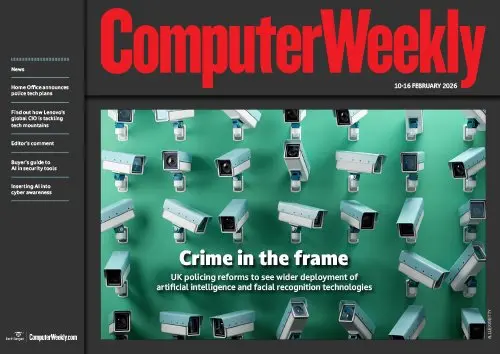
Home Office Announces Sweeping Police Technology Plans
The Home Office has outlined ambitious plans to transform UK policing through widespread adoption of artificial intelligence and facial recognition technologies. Under the wide-ranging reform programme, police forces will gain access to intelligent automation tools designed to streamline administrative tasks, freeing officers for frontline duties. The proposals include expanded deployment of live facial recognition cameras in public spaces, automated video analysis for evidence gathering, and predictive analytics to identify crime hotspots. Critics have raised concerns about privacy and algorithmic bias, but the Home Office argues that the technology will improve public safety and police efficiency. The reforms are part of a broader modernisation effort that also includes a new digital platform to share intelligence across forces. The announcement comes amid ongoing debates about the ethical use of AI in law enforcement, with some forces already piloting similar systems. The Home Office has promised robust safeguards, including an independent oversight board, to ensure the technology is used responsibly.
Interview: Art Hu, Global CIO, Lenovo
In an exclusive interview, Lenovo's global chief information officer Art Hu discusses how he is leveraging his experience in internal IT transformation to drive the company's growing services business. Hu, who joined Lenovo after holding senior IT roles at companies such as Hewlett Packard Enterprise and Microsoft, oversees the technology infrastructure that supports Lenovo's operations worldwide. He explains that the shift toward a services-oriented model – offering everything from managed infrastructure to device-as-a-service – requires a cultural change within the organisation. 'We are no longer just a hardware company; we are a solutions provider,' Hu says. He highlights the importance of data analytics and AI in both improving customer experiences and optimising internal processes. Hu also addresses the challenges of scaling services globally, including the need for consistent cybersecurity standards and localised support. Under his leadership, Lenovo's services revenue has grown significantly, with cloud-based offerings becoming a key differentiator in the competitive PC and server market. The interview provides insights into how traditional tech manufacturers are reinventing themselves in the age of digital transformation.
Security Think Tank: Stop Buying AI, Start Buying Outcomes
As artificial intelligence becomes embedded in cybersecurity products, the Security Think Tank urges CISOs and buyers to focus on outcomes rather than the technology itself. The feature warns that many vendors are hyping AI capabilities without delivering tangible improvements. 'The market is flooded with tools claiming to use AI, but most fail to address real security needs,' says Rik Ferguson, a thought leader in the space. The article provides a practical framework for evaluating AI security products: look for measurable reductions in detection time, false positives, and manual workload. It also highlights use cases where AI genuinely adds value, such as threat hunting, user behaviour analytics, and automated incident response. However, it cautions against over-reliance on AI, noting that human expertise remains critical for complex investigations. Buyers are advised to request proof-of-concept trials, demand transparent reporting on model performance, and ensure vendors can explain how their AI makes decisions. The guide concludes that AI should be a tool, not a silver bullet, and that success depends on integrating it into a well-architected security programme.
Deep Dive Into AI Security Vendor Approaches
A companion feature explores how cybersecurity suppliers are incorporating AI into their portfolios. From established players like Palo Alto Networks and CrowdStrike to emerging startups, vendors are embedding machine learning across endpoint protection, network security, and cloud security. The article examines the different strategies: some use AI to enhance threat intelligence by analysing massive datasets, while others focus on automating response actions. A key trend is the shift toward AI-powered security operations centres that can triage alerts and orchestrate workflows. The article also discusses the potential pitfalls, including overfitting and adversarial attacks on AI models. It advises organisations to assess whether a vendor's AI is truly differentiating or simply a marketing label. Suppliers that provide clear documentation, regular model updates, and integration with existing tools are more likely to deliver lasting value. The analysis serves as a practical resource for security teams navigating the crowded AI security landscape.
Source:Computerweekly News