

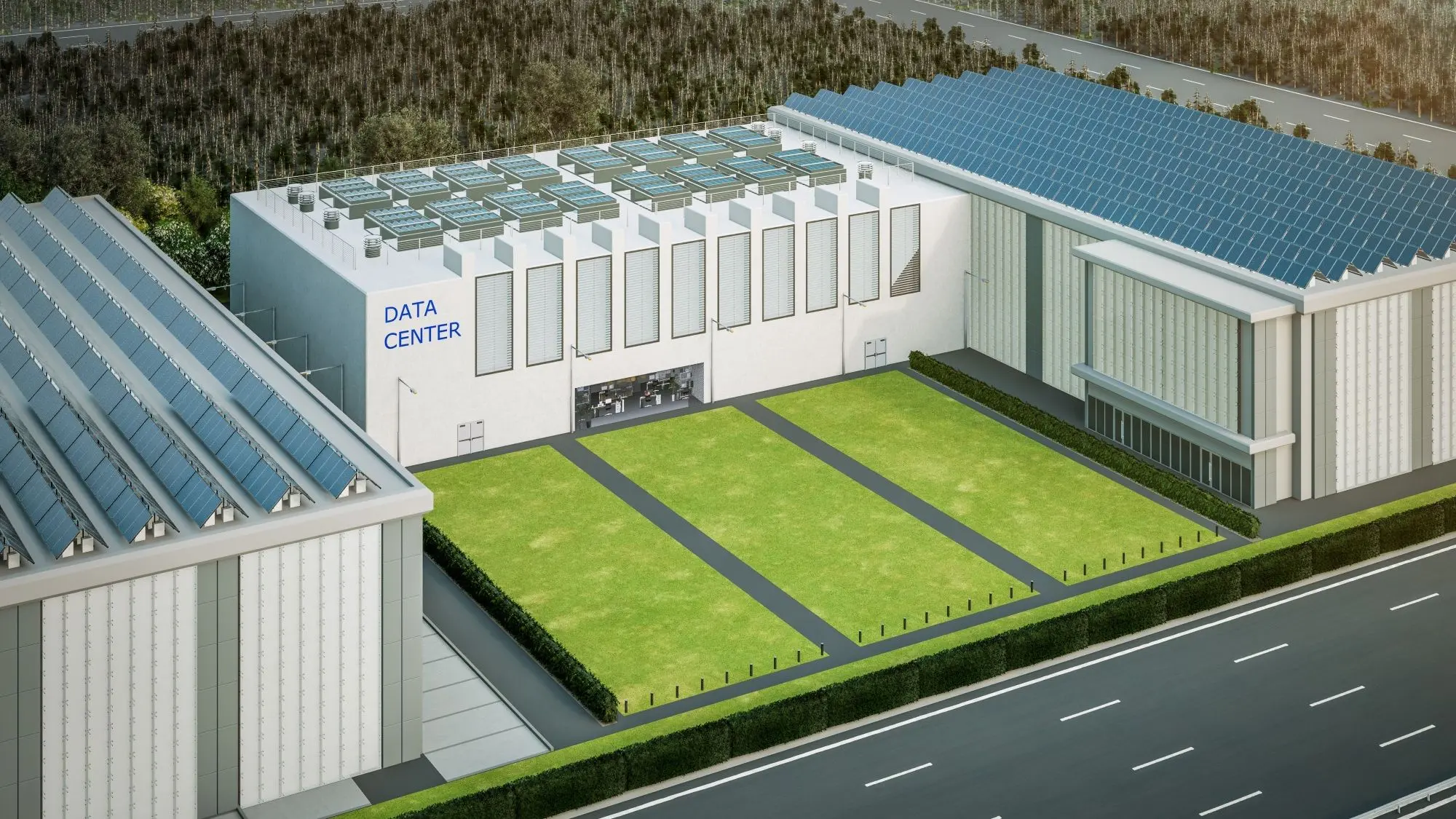
NVIDIA has made a bold claim: its next‑generation AI infrastructure can effectively solve the escalating water consumption crisis in data centers. With the rise of AI workloads, data centers have become increasingly thirsty for water, used primarily for cooling the massive heat generated by high‑performance computing hardware. NVIDIA’s assertion, delivered during a recent technology briefing, centers on a combination of advanced chip design, liquid cooling solutions, and system‑level optimizations that dramatically reduce reliance on water.
The statement, “The water consumption challenge for data centers is largely solved,” reflects NVIDIA’s confidence that its upcoming architectures, such as the Blackwell GPU platform and the Grace Hopper superchip, are engineered to minimize thermal output while maximizing computational throughput. By integrating more efficient transistors and on‑chip memory, NVIDIA claims these new processors generate less heat per watt of performance, thereby reducing the cooling load. Additionally, the company is promoting direct‑to‑chip liquid cooling, which can remove heat more effectively than traditional air‑cooling methods and often recycles the coolant in a closed loop, eliminating the need for evaporative water loss.
Water usage in data centers has historically been a hidden environmental cost. According to the U.S. Department of Energy, data centers consumed about 1.8% of total U.S. electricity in 2023, and many rely on water‑based cooling systems that draw millions of gallons annually. In drought‑prone regions like the southwestern United States, this has sparked controversy and regulatory scrutiny. Major tech companies have pledged to become water‑positive by 2030, but critics argue that rising AI adoption could worsen the problem. NVIDIA’s announcement is thus a strategic effort to position itself as a leader in sustainable AI infrastructure.
NVIDIA’s approach includes several key technologies. The first is the use of more power‑efficient GPU architectures. Each generation from NVIDIA has improved performance per watt, with the latest Blackwell GPU reportedly delivering a 2x performance increase while consuming only 10–15% more power than its predecessor. This translates to fewer GPUs needed for the same workload, which reduces overall heat output and associated cooling water. The second technology is liquid cooling adoption. NVIDIA is partnering with cooling solution providers like CoolIT and Asetek to offer rack‑level liquid cooling that captures heat directly from the GPU die. This system can reuse heat for building heating or simply dissipate it via radiators with minimal water evaporation. The third element is software orchestration. NVIDIA’s AI software stack, including the CUDA platform and the newly introduced NVIDIA AI Enterprise, enables dynamic power management and workload scheduling to minimize peak power draw, further reducing cooling demand.
Industry analysts have reacted with cautious optimism. While acknowledging NVIDIA’s engineering prowess, some note that the challenge of data center water consumption is not solely about hardware. The Uptime Institute reports that while efficient cooling can cut water use by 30–50%, legacy data centers that lack the infrastructure for liquid cooling may take years to retrofit. Moreover, the growth of AI workloads, especially large language model training and inference, could still push overall energy consumption higher. Nevertheless, NVIDIA’s claim that water consumption is “largely solved” may be an overstatement, but it reflects a serious effort to address a pressing issue.
From a historical perspective, data centers have moved from centralized mainframes to distributed cloud facilities, and the cooling methods have evolved from simple air conditioning to sophisticated economization cycles. In the 1990s, water usage was rarely measured; today it is a key performance indicator for sustainability. NVIDIA’s next‑gen infrastructure, if widely adopted, could set a new standard. The company is also investing in research on dielectric cooling and immersion cooling, which use non‑conductive fluids that do not evaporate, thus eliminating water consumption entirely. However, these technologies remain expensive and are typically reserved for supercomputing clusters.
Another angle is the economic impact. Lower water consumption reduces operational costs for data center operators, especially in regions with high water prices or regulatory limits. This could accelerate the adoption of NVIDIA’s hardware in markets like California, Arizona, and Singapore, where water scarcity is a major concern. Moreover, companies that rely on AI for their core business, such as cloud providers and AI startups, are under pressure from investors to demonstrate environmental responsibility. NVIDIA’s marketing of water‑efficient infrastructure could thus become a competitive differentiator.
Critics, however, point out that NVIDIA’s claims should be verified by third‑party testing. The company has provided internal benchmarks but has not yet published independent studies measuring water usage in production environments. Some environmental groups have called for standardized reporting metrics, such as water usage effectiveness (WUE), to ensure transparency. NVIDIA has responded by committing to publish WUE data for its reference designs and partner deployments.
Despite these reservations, the timing of NVIDIA’s announcement is significant. Global data center capacity is expected to double by 2030, driven by AI, and water scarcity is worsening due to climate change. If NVIDIA’s next‑gen AI infrastructure can deliver on its promises, it could mitigate one of the most contentious environmental impacts of the tech industry. The company’s roadmap includes future architectures like Rubin and Vera, which are expected to push efficiency even further. For now, the industry waits to see if the water consumption challenge is truly “largely solved” or if it remains a stubborn problem that requires a more holistic approach.
In conclusion, the nexus of AI performance and environmental sustainability is a defining challenge of our era. NVIDIA’s aggressive stance on water reduction is a welcome step, but it must be part of a broader ecosystem of renewable energy, efficient design, and responsible water stewardship. As data centers continue to proliferate, the technologies pioneered by companies like NVIDIA will be critical in balancing technological progress with planetary boundaries. The next few years will reveal whether the radical efficiency gains promised by next‑gen AI infrastructure are sufficient to turn the tide on water consumption.
Source:Windows Central News