

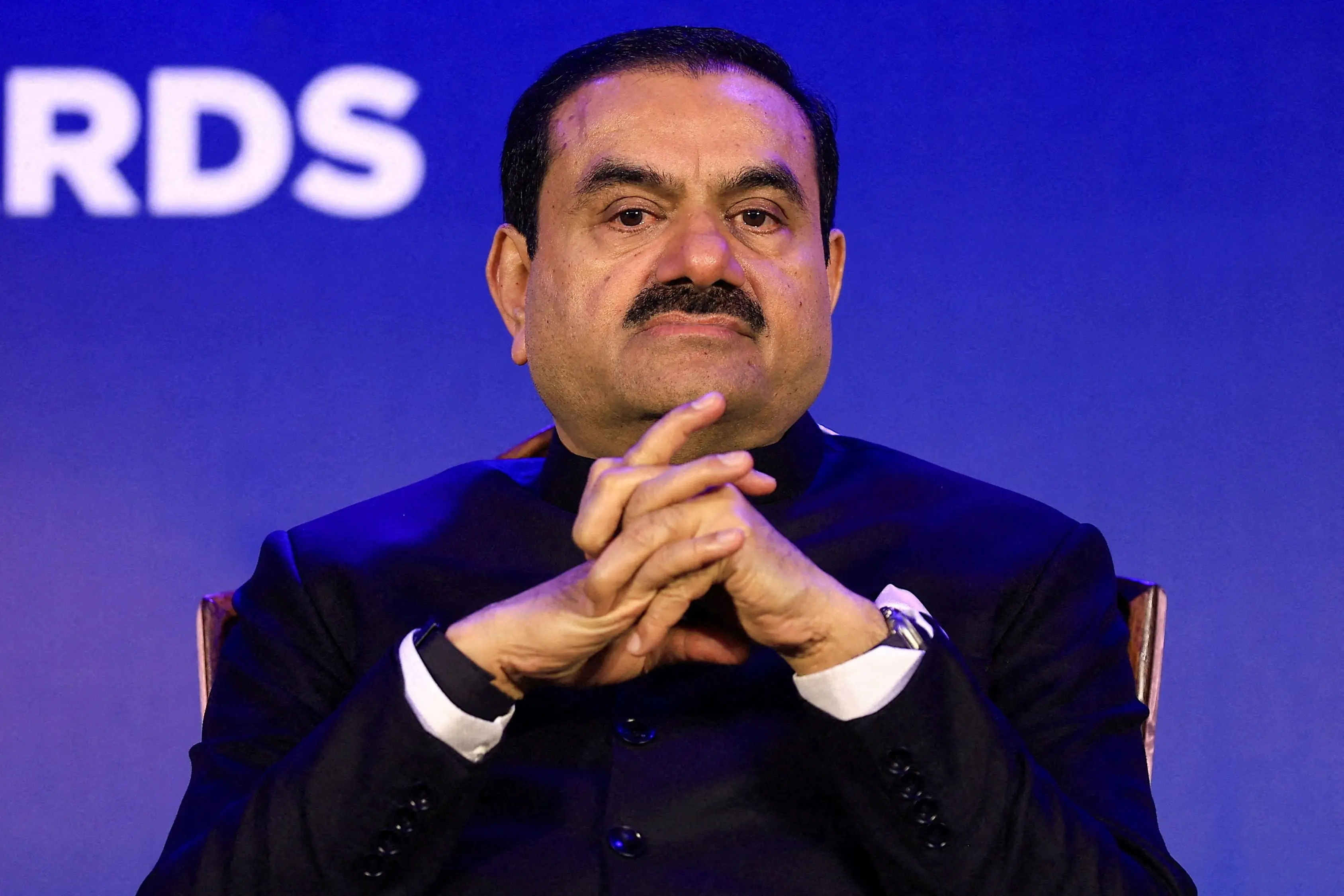
The United States Department of Justice (DOJ) has formally requested the dismissal of all charges against Indian billionaire Gautam Adani, arguing that the case is predominantly foreign in nature, lacks realistic prospects for conviction, and does not align with the agency's current enforcement priorities. The motion, filed on Saturday, responds to an order by U.S. District Judge Nicholas Garaufis, who earlier this month demanded prosecutors explain their rationale for seeking to drop the high-profile case.
Background of the Indictment
Gautam Adani, chairman of the Adani Group, was indicted in 2024 during the Biden administration on charges of securities fraud, wire fraud, and conspiracy to commit bribery. The indictment alleged that Adani and other executives agreed to pay bribes to Indian government officials to secure approvals for a solar power project developed by a subsidiary of the conglomerate. Prosecutors also accused Adani of misleading U.S. investors by providing assurances about the company's anti-corruption practices while concealing the alleged bribery scheme.
The case was seen as a significant escalation in U.S. efforts to combat foreign corruption under the Foreign Corrupt Practices Act (FCPA). At the time of the indictment, the DOJ emphasized that the alleged misconduct affected American investors who purchased Adani securities on U.S. exchanges.
DOJ's Rationale for Dismissal
In its 10-page filing, the DOJ argued that the charges are fundamentally flawed. The document states that the indictment was made public in the final days of the previous administration as part of a "name and shame" strategy, without any realistic expectation of bringing the case to trial. According to the filing, the alleged bribery payments were made by Indian nationals working for Indian companies to Indian government officials, with no U.S. interests directly involved. The DOJ noted that the case does not involve any U.S. company, criminal organization, or threat to national security.
"The 'payments' alleged in this case were made by Indian nationals, working for Indian companies, to the Indian government, without any U.S. interest being implicated in any way," the filing states. The DOJ further argued that pursuing such a foreign-centric case would stretch prosecutorial resources and conflict with current enforcement priorities set by the Trump administration.
Adani's Denials and Legal Strategy
The Adani Group has consistently denied any wrongdoing. Gautam Adani himself has not appeared before any U.S. court to answer the charges, and the group has maintained that all business activities comply with applicable laws. The indictment had triggered a significant sell-off in Adani Group stocks and raised questions about the conglomerate's governance standards. The group's flagship company, Adani Enterprises Limited, has seen its stock price recover partially in recent months.
Legal experts note that Adani's refusal to submit to U.S. jurisdiction adds another layer of complexity. The DOJ acknowledged in its filing that it lacks effective means to compel his appearance, making a conviction even more unlikely.
Judicial Discretion and the Path Ahead
Under U.S. law, federal judges have limited authority to force prosecutors to pursue cases they wish to drop. However, Judge Garaufis must still formally approve the dismissal before the charges are officially vacated. The judge had previously expressed skepticism about the DOJ's sudden change of position, particularly given the serious nature of the allegations. Legal observers expect the judge to closely scrutinize the DOJ's arguments before making a final ruling.
The case is part of a broader trend under the second term of President Donald Trump, where the DOJ has moved to discontinue several high-profile white-collar criminal probes. Critics argue that this signals a weakening of anti-corruption enforcement, while supporters contend it allows the agency to focus on more pressing domestic and national security matters.
Wider Implications
The decision to drop charges against Adani has geopolitical implications. India and the United States have increasingly cooperated on trade, technology, and strategic issues, and the case had created diplomatic friction. New Delhi had expressed concern over the U.S. prosecuting a prominent Indian business figure. The dismissal could ease tensions and strengthen bilateral ties, especially as both nations seek to deepen economic partnerships.
For Gautam Adani, the development removes a legal cloud that threatened his business empire. The Adani Group has been aggressive in expanding into renewable energy, infrastructure, and data centers. However, the group still faces scrutiny from Indian regulators and opposition politicians over previous allegations of accounting fraud and stock manipulation—allegations the group has denied.
Experts caution that while the U.S. criminal case appears to be ending, it does not immunize Adani from civil lawsuits or investigations by other authorities. Several class-action suits filed by U.S. investors remain pending, and the Securities and Exchange Commission (SEC) could still pursue its own enforcement actions.
Historical Context of U.S. Foreign Corruption Enforcement
The FCPA has long been a tool for U.S. prosecutors to target bribery of foreign officials by companies and individuals with ties to the United States. Landmark cases against entities like Siemens, Alstom, and Odebrecht resulted in billions of dollars in fines and penalties. However, critics have argued that the law is sometimes applied extraterritorially, straining diplomatic relations and punishing conduct that primarily affects foreign jurisdictions.
The Adani case was unusual because it involved allegations of bribery by an Indian company and Indian officials, with no U.S. citizens or companies directly participating. The DOJ's current position suggests a narrower interpretation of the FCPA's reach, emphasizing that the law should target only conduct that clearly harms U.S. interests.
Prosecutors in the Biden administration had taken a more expansive view, arguing that the use of U.S. financial systems and the presence of American investors were sufficient to justify jurisdiction. The reversal under Trump reflects a broader policy shift away from aggressive cross-border corruption enforcement.
What the Future Holds
Judge Garaufis is expected to rule on the DOJ's motion within weeks. If he grants the dismissal, the charges will be permanently dropped with prejudice, meaning they cannot be refiled. If he denies the motion, the DOJ would be forced to proceed with prosecution, but legal experts consider that unlikely given the strong presumption of prosecutorial discretion.
For now, Gautam Adani and his group can look forward to a significant legal victory. The case underscores the volatility of international white-collar enforcement and the influence of political administrations on prosecutorial decisions. As the Adani Group continues its global expansion, the underlying questions about governance and transparency will likely persist in both domestic and international forums.
Source:Zonebourse News